


Why sepsis awareness matters for lupus patients
Infections — which can lead to sepsis — are one of the leading causes of hospitalization and complications for people living with systemic lupus erythematosus (SLE). Because both lupus and many lupus treatments affect the immune system, knowing how to stay ahead of sepsis is a vital part of navigating life with lupus.
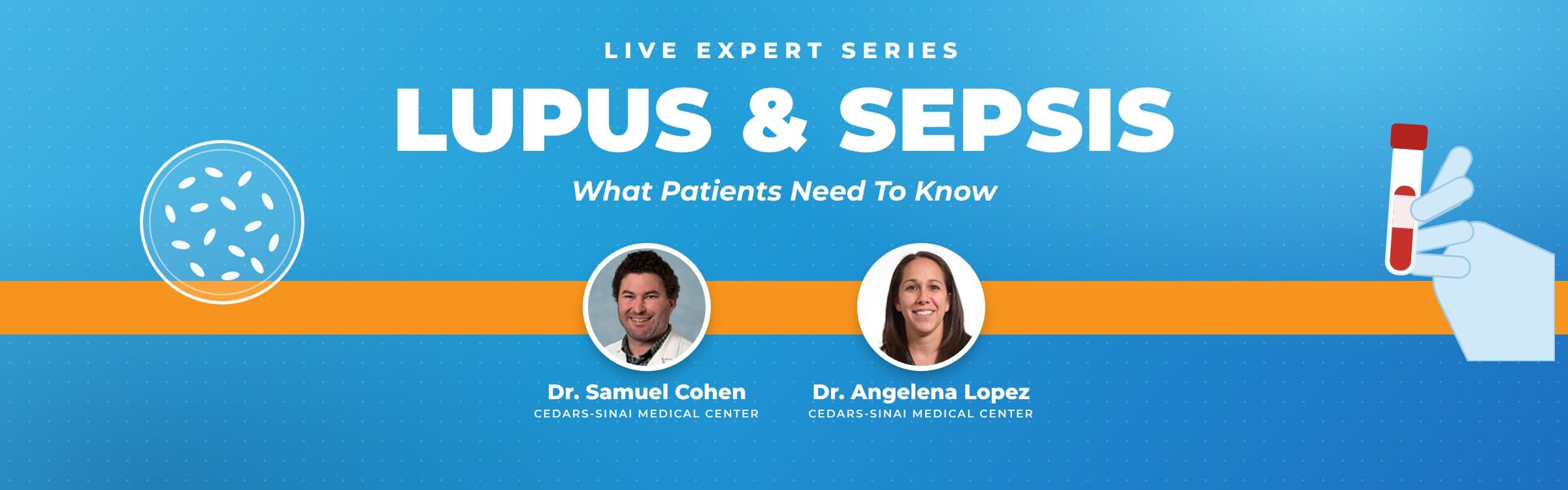
In this Lupus LA Live Expert Series session, two Cedars-Sinai pulmonary and critical care physicians who treat sepsis in the intensive care unit explain why the risk is higher, the symptoms to watch for, how doctors tell sepsis apart from a lupus flare, and what recovery looks like.
Key takeaways
- Sepsis is a medical emergency. It is the body’s extreme, dysregulated response to an infection, and it can damage the kidneys, liver, heart, and other organs.
- Lupus raises the risk in two ways: the disease itself weakens immune defenses, and medications that calm lupus (steroids and other immunosuppressants) also lower the body’s ability to fight infection.
- Sepsis and lupus flares look alike. Both can cause fever, fatigue, shortness of breath, kidney injury, joint pain, and abnormal blood counts — and an infection can trigger a flare, so both can happen at once.
- Steroids can hide a fever, so don’t wait for a high temperature before seeking care.
- Trust your baseline. If symptoms feel different from your usual flares, or you are more confused or less alert than normal, go to the emergency department and say, “I’m worried this could be an infection or sepsis.”
- Prevention works: stay current on recommended vaccines (including pneumococcal), wash hands often, consider masking in crowded places during respiratory-virus season, and get infections treated early.
Watch the full Live Expert Series session
“Lupus & Sepsis: What Patients Should Know” with Dr. Cohen and Dr. Lopez · Watch on YouTube
Jump to a topic
- 0:00Welcome & introductions
- 1:18What is sepsis vs. septic shock?
- 3:48What causes sepsis & how it affects organs
- 5:31Risk factors for sepsis
- 6:11Why lupus increases sepsis risk
- 9:17How sepsis is treated in the hospital
- 11:32Sepsis vs. lupus flare: overlapping symptoms
- 16:48Lab tests that help tell them apart
- 19:04When infection triggers a flare
- 20:15Q&A: Urgent care or the ER?
- 21:50Q&A: Can steroids mask a fever?
- 23:41Q&A: Brain fog vs. sepsis confusion
- 25:43Q&A: Does the pneumonia vaccine help?
- 28:38Q&A: Being taken seriously in the ER
- 31:16Q&A: Recovery & flares after sepsis
- 34:46Q&A: How to lower your risk
- 37:01Q&A: Rebuilding strength after the hospital
Meet the experts

Samuel Cohen, MD
Internal medicine and pulmonary/critical care specialist at Cedars-Sinai Medical Center in Los Angeles and a member of its Advanced Lung Disease team. Dr. Cohen cares for critically ill patients in the ICU as well as patients in outpatient pulmonary clinic.

Angelena Lopez, MD
Internal medicine and pulmonary/critical care specialist at Cedars-Sinai Medical Center and Associate Program Director of its Pulmonary & Critical Care Fellowship. Dr. Lopez practices predominantly in the ICU and outpatient pulmonary clinic, along with inpatient pulmonary consult services.
What is sepsis?
Sepsis is the body’s overwhelming, dysregulated response to an infection. Instead of fighting the infection locally, the immune system triggers widespread inflammation that can injure the body’s own tissues and organs. The trigger is most often a bacterial infection, but viruses, fungi, and — in people with weakened immune systems — opportunistic infections can also cause it.
Septic shock is the most severe form. Blood pressure stays dangerously low and organs don’t receive enough oxygen, which can lead to organ failure. Doctors often measure lactic acid in the blood as a marker that tissues aren’t getting or using enough oxygen.
Sepsis can affect almost any organ. The kidneys, liver, and heart are commonly involved, and it can also cause abnormal blood counts and changes in mental status such as confusion.
U.S. adults develop sepsis in a typical year; at least 350,000 die in the hospital or are discharged to hospice.
Source: CDC [1]
of adults with sepsis arrive at the hospital with an infection that started in the community and isn’t getting better.
Source: CDC [1]
Who is at higher risk?
- Older adults
- People with bacteremia (bacteria in the bloodstream)
- People with diabetes or cancer
- People who are immunosuppressed — from a condition such as lupus, or from medications that lower immune activity
Why does lupus increase the risk of sepsis?
Lupus is an autoimmune disease: the immune system is dysregulated at baseline, and that dysregulation carries over into how it reacts when it meets a real threat. According to Dr. Lopez, several lupus-specific factors combine to raise sepsis risk:
Weakened immunity from lupus itself
Lupus can lower the body’s defenses, giving an infection more room to take hold and progress toward sepsis or septic shock.
Immunosuppressive treatment
Steroids and other lupus medications are designed to dampen the immune response, creating a baseline level of immunosuppression. Higher steroid doses over longer periods raise the risk of opportunistic infections.
Organs already affected by lupus
If lupus has already affected an organ — most notably the kidneys through lupus nephritis — that organ is more vulnerable to further damage during sepsis.
Prior infection history
A history of drug-resistant or opportunistic infections changes which antibiotics doctors choose first, so it’s essential information to share.
What the research shows
- In a U.S. national study of adult lupus hospitalizations, about 1 in every 50 ended in an in-hospital death; infections accounted for 37% of those deaths, and sepsis was the single most frequent cause. [4]
- A national population-based study found that people with SLE were 12 to 24 times more likely than the general population to be hospitalized for serious infections such as pneumonia and sepsis. [5]
- Sepsis has been identified as the most common cause of premature death among U.S. lupus patients aged 50 and younger, and infection is the most common reason people with lupus are admitted to the ICU. [6]
It’s really important for physicians caring for patients with autoimmune diseases to know the patient’s disease history and all current and prior medications — because that directly affects the level of immunosuppression.
Sepsis or a lupus flare? How to tell the difference
If you’ve had a lupus flare, many sepsis symptoms will sound familiar. That’s because at their core, both are an upregulation of the body’s systemic inflammatory response. Both drive up signaling proteins called cytokines, raise inflammatory markers, and can lead to organ dysfunction. The difference is the trigger: in sepsis, the immune system is reacting to an organism (bacteria, virus, or fungus); in lupus, it is reacting to the body’s own cells.
| Symptom | Sepsis / infection | Lupus flare |
|---|---|---|
| Fever | Tends to run higher | Often lower-grade — but fever height alone is an unreliable way to tell them apart |
| Fatigue | Common, often an early sign | Common, often an early sign |
| Shortness of breath | Especially with pneumonia; cough and sputum are clues | Can come from pleuritis — inflammation of the lung lining that makes deep breaths painful |
| Kidney injury | Common; may be temporary or longer-lasting | Lupus nephritis from immune-complex deposits in the kidneys |
| White blood cell count | Can be high or low (high is more common) | Can also be abnormal |
| Joint pain | Can occur with reactive arthritis during or after infection | Very common |
| Rash | Possible, but not in a characteristic pattern | The malar (“butterfly”) rash is quite characteristic of lupus |
Tests doctors use to tell them apart
Cultures
Blood, urine, and respiratory cultures identify the infecting organism. A positive culture means infection is present and needs treatment — even if a flare is happening too.
Procalcitonin
Commonly elevated with bacterial infection and less likely to rise from a lupus flare alone. Research supports its high specificity, though studies are mixed, so doctors interpret it alongside other findings. [7],[8]
Anti-dsDNA antibodies
Antibodies against double-stranded DNA shouldn’t appear from infection alone. In lupus, levels often climb very high during a flare.
Complement levels (C3/C4)
Complement proteins are consumed in both conditions, but levels typically drop much further in a lupus flare. In sepsis, the drop is usually modest — or levels are normal.
Chest X-ray
A focal finding on X-ray with worsening cough, fever, and sputum points strongly toward pneumonia rather than lupus-related lung inflammation.
Sepsis is a very common trigger for a lupus flare — so you can have both at the same time. That’s why it’s so important to listen to your body and get your doctor involved early.
When to go to the emergency room
Seek emergency care right away if you notice:
- Symptoms that feel different from your usual lupus flares, or that keep getting worse instead of improving
- A very fast heart rate, fast breathing, or persistently low blood pressure
- New confusion, or being noticeably less alert or awake than usual — especially if someone close to you notices
- Signs of infection (cough with sputum, burning with urination, a new painful or red skin area) along with feeling very unwell
If you think you may have sepsis, call 911 or go to the nearest emergency department. Sepsis is a medical emergency.
Urgent care or the ER?
Urgent care is designed for quick evaluations and prescriptions you can manage at home. Because people with lupus are more likely to need additional treatment — and possibly input from a rheumatologist — Dr. Lopez recommends going to the emergency department if you feel different from your baseline flares.
Steroids can hide a fever
Fever is the body’s way of raising its temperature set point to make it harder for germs to survive. Steroids suppress the cytokines that drive this response, so they can blunt a fever. If you take steroids, don’t rely on a high temperature as your warning sign. Dr. Cohen adds that knowing your dose and how long you’ve been on it matters: above certain doses and durations, doctors widen their search to include opportunistic infections.
Brain fog vs. sepsis-related confusion
Many people with lupus live with brain fog. The physicians’ guidance is to measure against your baseline. Concerning changes include frank confusion or being less alert or awake than you usually are — particularly if family or friends notice something is off.
What to say so you’re taken seriously
Emergency clinicians sometimes see “lupus” and assume a flare. Both physicians encourage patients to advocate for themselves directly:
“This feels different from my normal lupus flares. I’m concerned I might have an infection — are you concerned about sepsis?”
“I’ve recently been around someone who was sick.”
“I’m taking [steroid / immunosuppressant name and dose] and have been on it for [length of time].”
Describe specific new symptoms — urinary burning or frequency, a productive cough, a new skin wound — because they help doctors find the source of infection and order targeted tests and cultures.
How sepsis is treated in the hospital
Not every infection requires hospitalization, but abnormal vital signs and lab results in someone with an autoimmune disease make inpatient care more likely. Here’s what to expect:
- Early, broad-spectrum antibiotics, chosen based on the most likely source of infection — which is why your care team will ask many detailed questions about your symptoms
- IV fluids to support blood volume and circulation
- Close monitoring of heart rate, breathing rate, blood pressure, and temperature
- Lab work and cultures of blood, urine, and respiratory samples to pinpoint the infection
- Source control — a procedure to drain or clear a contained pocket of infection, when needed
- Vasopressors — medications that raise blood pressure — if sepsis progresses to septic shock, to keep oxygen-rich blood flowing to vital organs
For more severe infections, doctors may temporarily pause immunosuppressive lupus medications to help the body clear the infection. This isn’t done lightly, and it can raise the risk of a flare afterward.
Recovering from sepsis with lupus
Expect deconditioning — and plan for it
Long stretches in a hospital bed take a real toll on strength and stamina. As a rule of thumb shared by Dr. Lopez, each day in a regular hospital bed can feel like three to four days of bed rest at home, and each ICU day closer to five or six.
Have a plan for restarting lupus medications
If your immunosuppressants were paused, there can be a lag after restarting when lupus is less controlled — right after a period of intense immune activation. Before you leave the hospital, ask your care team when your medications will restart and who will manage that transition.
Rebuild strength gradually
- Start in the hospital: sit upright, move to a chair, and walk when your care team says it’s safe.
- At home, set movement reminders: if 20–30 minutes pass without activity, do a few sit-to-stands or walk to the mailbox.
- Some breathlessness is normal as you rebuild. Seek care for chest pain or dizziness.
- Ask about outpatient physical therapy — you may be eligible.
- Ask about a post-ICU clinic, where specialists help identify and manage lingering effects after critical illness.
How to lower your risk of sepsis
Stay up to date on vaccines
Vaccines are among the best tools for preventing sepsis from specific organisms. The CDC recommends pneumococcal vaccination for adults 19–49 with immunocompromising conditions, including those treated with immunosuppressive drugs. [9] Immunosuppressed patients may qualify for some vaccines at a younger age than usual — ask your doctor.
Wash your hands often
Good hand hygiene reduces transmission, especially before touching your face.
Be strategic in crowds
During respiratory-virus season, decide whether to go to crowded places and consider wearing a mask when you do.
Act early
The sooner an infection is identified and treated, the better. Don’t wait to see whether unusual symptoms pass.
Note that a vaccine protects against specific strains, so you can still get pneumonia from other organisms after vaccination. And if you do get infected with a strain you were vaccinated against, the illness is often less severe.
Frequently asked questions about lupus and sepsis
Are people with lupus more likely to get sepsis?
Yes. Lupus itself weakens immune defenses, and medications used to control lupus — such as steroids and other immunosuppressants — further reduce the body’s ability to fight infection. Studies show people with SLE are hospitalized for serious infections like sepsis far more often than the general population, and sepsis is a leading cause of in-hospital death in lupus.
How can I tell if I have sepsis or a lupus flare?
It can be very hard to tell at home because symptoms overlap: fever, fatigue, shortness of breath, kidney problems, and joint pain can occur with both. Doctors use cultures, procalcitonin, anti-dsDNA antibodies, complement levels, and imaging to distinguish them. An infection can also trigger a flare. If symptoms feel different from your usual flares or are getting worse, seek medical care promptly.
Can prednisone or other steroids hide signs of sepsis?
Yes. Steroids suppress the immune signals that cause fever, so they can blunt or mask a fever. If you take steroids, don’t wait for a high temperature before seeking care when you feel unusually unwell.
Should I go to urgent care or the emergency room if I have lupus and think I have an infection?
Cedars-Sinai critical care physician Dr. Angelena Lopez recommends the emergency department if you feel different from your usual lupus flares, because people with lupus are more likely to need additional treatment or a rheumatologist’s input than urgent care can provide.
What should I say in the ER if I’m worried about sepsis?
Be direct: tell the team your symptoms feel different from your normal flares, that you’re concerned about an infection or sepsis, and list your current immunosuppressive medications and doses. Describe any specific new symptoms, such as urinary burning or a productive cough, and mention recent exposure to anyone who was sick.
Does the pneumonia vaccine reduce the risk of sepsis?
Yes — it reduces the risk of sepsis caused by the pneumococcal strains it covers, and can make infections less severe. It doesn’t protect against every organism that causes pneumonia. The CDC recommends pneumococcal vaccination for adults with immunocompromising conditions, so ask your doctor whether you’re due.
Can sepsis cause a lupus flare afterward?
It can. Sepsis is a common flare trigger, and if immunosuppressive medications are paused to treat a severe infection, lupus may be less controlled for a period after they restart. Ask your care team for a clear plan for restarting medications before you leave the hospital.
How long does it take to recover after being hospitalized for sepsis?
It varies, but expect deconditioning. As a rule of thumb from the webinar, each hospital day can equal about three to four days of bed rest at home, and each ICU day closer to five or six. Gradual activity, outpatient physical therapy, and post-ICU clinics can help.
Sources & references
- Centers for Disease Control and Prevention. Sepsis and About Sepsis. CDC.
- World Health Organization. Sepsis fact sheet. May 2024.
- Rudd KE, et al. Global, regional, and national sepsis incidence and mortality, 1990–2017: analysis for the Global Burden of Disease Study. The Lancet. 2020.
- Manadan AM, et al. Reasons for Hospitalization and In-Hospital Mortality in Adult Systemic Lupus Erythematosus. ACR Open Rheumatology. 2020.
- Tektonidou MG, et al. Burden of Serious Infections in Adults with Systemic Lupus Erythematosus: A National Population-based Study, 1996–2011. Arthritis Care & Research. 2015.
- Epidemiology and outcomes of sepsis among hospitalizations with systemic lupus erythematosus admitted to the ICU: a population-based cohort study. Journal of Intensive Care. 2020.
- Serio I, et al. Can procalcitonin be used to distinguish between disease flare and infection in patients with systemic lupus erythematosus: a systematic literature review. Clinical Rheumatology. 2014.
- Liu LN, et al. Comparison of plasma/serum levels of procalcitonin between infection and febrile disease flare in patients with systemic lupus erythematosus: a meta-analysis. Rheumatology International. 2017.
- Centers for Disease Control and Prevention. Summary of Risk-based Pneumococcal Vaccination Recommendations.
About Lupus LA
Founded in 2000, Lupus LA is an independent, national nonprofit headquartered in Los Angeles that serves people affected by lupus nationwide and reaches an international community through virtual programs. Its work supports patient services, medical research and rheumatology fellowships, and lupus awareness and advocacy.
Medical disclaimer: This page summarizes an educational webinar and published research. It is not a substitute for professional medical advice, diagnosis, or treatment. Always talk with your rheumatologist or healthcare provider about your symptoms and medications. If you think you may have sepsis or another medical emergency, call 911 or go to the nearest emergency department.
Last updated October 21, 2026
